Using the Calculator
For the input voltage, enter R1, R2 and the output voltage.
For the output voltage, enter the input voltage, R1 and R2.
For the value for R1, enter the input voltage, R2 and the output voltage.
For the value for R2, enter the input voltage, R1 and the output voltage.
What a voltage divider does
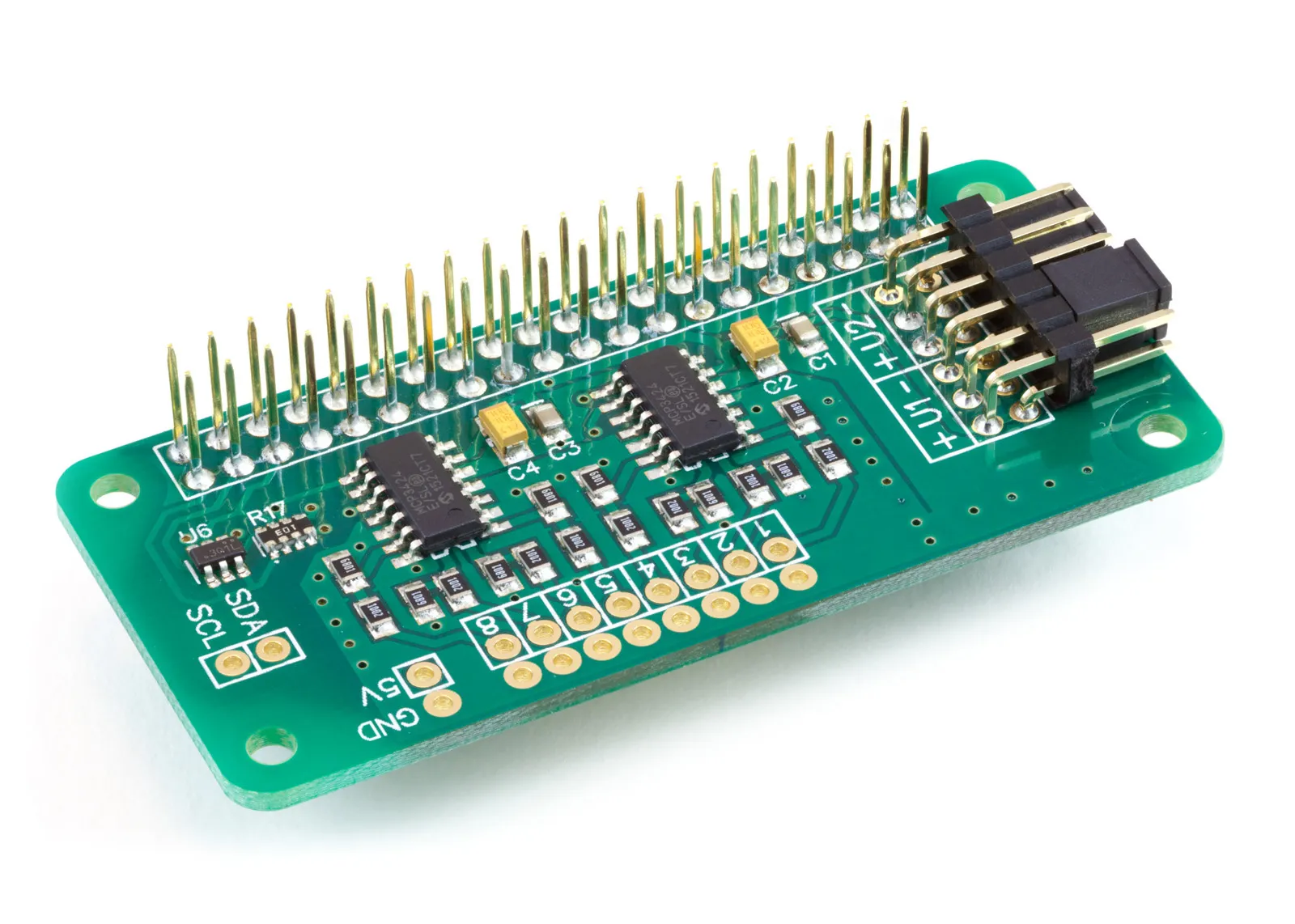
A voltage divider is two resistors in series across a supply, with the output taken from the point where they meet. It's one of the most common building blocks in electronics, used to drop a voltage or to set a reference level. The same arrangement sits on every input of our ADC Pi.
It works on a simple idea: in a series circuit the voltage divides across the resistors in proportion to their values, so the larger resistor drops the larger share.
The formula
The output voltage Vout is:
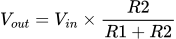
where Vin is the input voltage, and R1 and R2 are the two resistors.
Where it comes from
The two resistors are in series, so the total resistance is R1 + R2, and the same current flows through both:
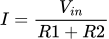
The voltage across each resistor is that current times its resistance. Across R1:

And across R2:

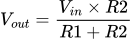
The output is taken across R2, so Vout is that second result:
Example
With Vin = 12V, R1 = 2KΩ, and R2 = 3KΩ.
Using the voltage divider formula:

So the output is 7.2 V.
What it's used for
- Setting a reference voltage below the supply.
- Scaling a signal down to a level another stage can handle.
- Biasing a transistor.
- Producing fixed voltage levels for a comparator or ADC input.
One caveat worth remembering: a plain divider only holds its output voltage while whatever it feeds draws very little current. If the load draws a meaningful current of its own, it pulls the output down, and you need to size the resistors accordingly or buffer the output.